
19th July 2026
Welcome
In the Vegetable garden our own very special Mummy Pea has finished early and we are leaving it for seed. The Potatoes can now be dug up, and the soft fruit, Asparagus and Rhubarb are all finished and waiting to be cut back. Salad and bean crops will continue to require water – either from cans or the Moat.
The roses flowered early this year; those that were repeat flowering were dead headed. The American Pillar rose on the Pergola in the Vegetable Garden is nonrepeating.
The Iris and Delphiniums in the long bed by the Greenhouse have been cut down. One, to let the sun ripen their rhizomes, the other, in the hope of a second flowering. This very hot dry bank behind has been planted with rose Pink Bells as ground cover but it is struggling. Not so the blue chicory- Cichorrum pumilum which appeared one year and serves to provide blue flowers and some shade for the roses
The Dell is a haven of shade filled by large Chestnut trees, Hornbeam, Holm Oak, Snowdrops and Bluebells. When one of the large trees blew down the site was then exposed to sunlight and Silver Birch (Jacquemontii) and Chamomile were planted in the space created.
Don’t miss the medieval Fishponds which are mowed by the sheep and where the House Martins and Swifts reliably swoop in at 6pm to scoop up the water.
On the front of the Hall the Magnolia Grandiflora is in flower and beneath it the large pink Crinums. These members of the Lily family can survive for hundreds of years- ours were planted only 6 years ago but are clearly enjoying their sunny sheltered position.
In the West Lawn the large white flowers by the Urns are Romneya. Belonging to the Poppy family and enjoying the sunny sheltered position this plant is a native to southern California and drought tolerant.
The gravel at the bottom of the West lawn is home to a multitude of plants most of which have self -seeded. The Geranium Psilostemon has flowered and been cut to the ground where you might see it is now regrowing. The blue flowers of Nigella (Love in a Mist) have finished but it produces equally attractive striped seed pods. The Thrift and Californian Poppies have died down but there is a new addition, Eupatatorium, and its seeds must have blown over from across the moat where it is planted.
The Wild Garden gets cut once a year in July and should have been cut down. It starts off in the spring with the beautiful Fritillaria, Anemone Nemorosa and Blanda, then the White Geraniums and eventually it is taken over by the Ox Eye Daisy. This year Hedgehogs have taken shelter from the heat amongst the Vegetation, so we have delayed cutting and if you walk through, please do so carefully.
We have had a problem with Honey Fungus on our beautiful Pleached Hornbeam. With help from the RHS advice team (free to members) we have, we think, contained it. Ask if you want to know more.
Enjoy the song of over 40 reported birds in the gardens and look in the Moat for the nibbled water lily leaves – Carp!
Stay healthy and good gardening
Lynda Tucker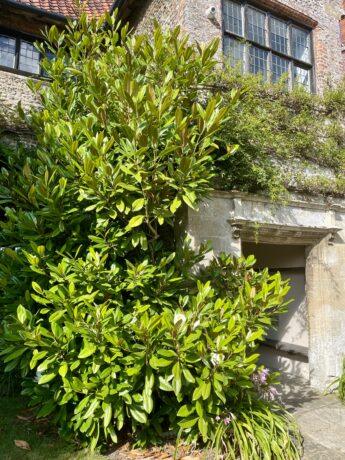
Visit our Instagram page for further updates and photography


